They just couldn't resist, could they? .December 1999, A cover of an old Rolling Stones classic, this one features loads of top pop and rock stars belting out a fantastic rock tune. Not to everyone's taste, but hey, it's for charity so we'll let them off..
Various artists for children's promise.
Keith Richards, Kid Rock, Mary J. Blige, Kelly Jones of Stereophonics, Jon Bon Jovi, Kelle Bryan, Jay Kay of Jamiroquai, Ozzy Osbourne, Womack & Womack, Lionel Richie, Bonnie Raitt, Dolores O'Riordan of The Cranberries, James Brown, The Spice Girls, Mick Jagger, Robin Williams, Jackson Browne, Iggy Pop, Chrissie Hynde, Skin of Skunk Anansie, Annie Lennox, Mark Owen, Natalie Imbruglia, Huey, Fun Lovin' Criminals, Dina Carroll, Gavin Rossdale of Bush, B.B. King, Joe Cocker, The Corrs, Steve Craddock and Simon Fowler of Ocean Colour Scene, Ronan Keating, Ray Barretto, Herbie Hancock, Francis Rossi & Rick Parfitt of Status Quo, S Club 7, Eric Idle.
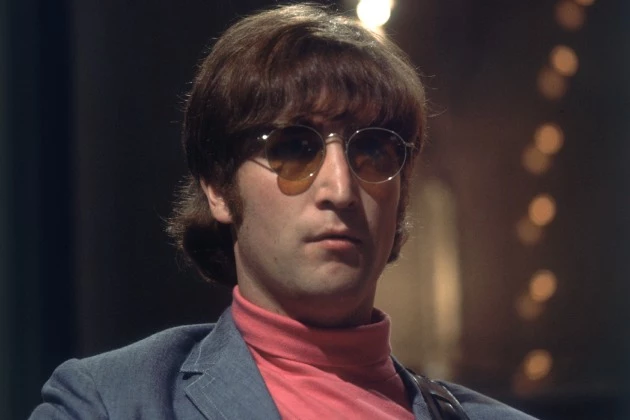
John Lennon was known for having more than his fair share of brushes with the law while he was alive, but this is ridiculous.
The U.K.’s Daily Mail reports that no fewer than four men named John Lennon have been involved in a recent Brazilian crime wave — with one of them even turning up as the victim of what’s being described as a revenge killing.
The arrests all occurred over the span of a few weeks, starting with the Dec. 19 collaring of suspected murderer John Lenon Camargos Gomes. On Jan. 8, police nabbed John Lennon Fonseca Ferreira during an attempted robbery; the following day, they discovered the body of John Lennon Sebastiao da Silva in the back seat of a car. Finally, on Feb. 1, John Lennon Ribeiro Siqueira was foiled while trying to rob a shop.
It’s all rather bizarre-sounding on the surface, but as the Daily Mail’s report points out, there’s a reason for all these John Lennons heading to the hoosegow. As in most other parts of the world, the Beatles were tremendously popular in Brazil during their heyday — to the extent that “thousands of mothers” named their sons after Lennon in tribute after Lennon was murdered on Dec. 8, 1980.
In October 1963, the word “Beatlemania” was coined in Britain to describe the reactions of screaming young girls every time they heard the Beatles‘ music, either in performance or on the radio. On Feb. 7, 1964, the U.S. got its first proper taste of Beatlemania, as the group arrived in America for the first time.
As their star rose in the U.K., their singles were repeatedly rejected by EMI’s American subsidiary, Capitol Records, and instead issued on small, local labels Vee-Jay and Swan to little success. But by the end of 1963, after a few news reports focused on the Beatles’ success in England, Capitol relented and released ‘I Want to Hold Your Hand.’ The song began its rise up the charts, and while performing in Paris in mid-January 1964, Beatles received word that ‘I Want to Hold Your Hand’ had gone to No. 1 in America.
A few months prior, Ed Sullivan had arrived in London as the Beatles were returning home from a tour of Sweden and witnessed Beatlemania first-hand. Curious, he inquired about booking the band for his show. An arrangement was eventually reached, with the band appearing on three consecutive weeks, beginning Feb. 9.
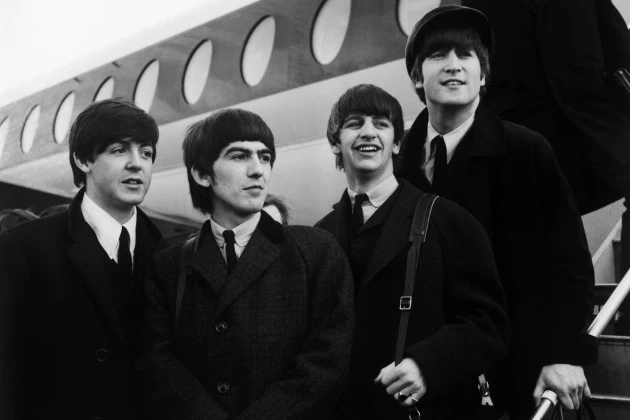
Early in the morning of Feb. 7, the group left London on Pan Am flight 101 to conquer America, receiving a send-off at the airport from thousands of fans. That afternoon, they landed at John F. Kennedy Airport, which had been renamed in memory of the slain president six weeks earlier. Unaware of how they would be received in a land where other British acts had fallen flat, they were shocked to discover that an estimated 5,000 screaming fans were waiting for them.
A swarm of reporters and photographers crammed into Pan Am’s office for a press conference. The media, thinking that rock n’ roll singers were incapable of talking in complete sentences, asked a variety of condescending questions, mostly related to their hairstyle. But the Beatles, who were used to this treatment, fired back with wit and charmed those in attendance.
The scenes at the airport, and the rest of that first trip to America, was captured on film by Albert and David Maysles. Originally released in 1964, it was re-edited and released for home video in 1991 as ‘The Beatles: The First U.S. Visit.’